Vascular, Diabetic Foot & Dialysis Procedures
Varicose Vein Surgery
Varicose veins are enlarged superficial veins, usually in the legs, caused by faulty valves and backward blood flow. Treatment is based on symptoms, skin damage, bleeding or ulceration—not appearance alone.
Educational planning information. Individual advice follows examination and review of investigations. Consultations are available in Rawalpindi for patients from Rawalpindi and Islamabad.
Clinical focusCirculation, foot care and vascular access
01Varicose veins and venous reflux02Circulation, foot care and vascular access03Vascular, Diabetic Foot & Dialysis Procedures
Procedure-specific visual guideWhy choose Dr. Naveed
Experienced surgical judgement for Varicose Vein Surgery
Clear diagnosis, realistic treatment planning and careful follow-up from a consultant surgeon whose clinical practice is shaped by academic teaching and military medical service.
01 · Understanding the procedure
What Varicose Vein Surgery is designed to achieve
Healthy vein valves direct blood toward the heart. When valves fail, pressure enlarges superficial veins. Deeper veins continue to carry most blood after a diseased superficial vein is closed or removed.
Varicose veins are enlarged superficial veins, usually in the legs, caused by faulty valves and backward blood flow. Treatment is based on symptoms, skin damage, bleeding or ulceration—not appearance alone.
02 · Conditions treated
Conditions and clinical situations addressed by Varicose Vein Surgery
The exact indication is confirmed from symptoms, examination and appropriate investigations.
Varicose veins and venous reflux
Healthy vein valves direct blood toward the heart. When valves fail, pressure enlarges superficial veins. Deeper veins continue to carry most blood after a diseased superficial vein is closed or removed.
Pain
Pain, swelling or skin change despite conservative measures
Recurrent superficial thrombophlebitis or bleeding
Recurrent superficial thrombophlebitis or bleeding
Venous ulceration with treatable superficial reflux
Venous ulceration with treatable superficial reflux
03 · Symptoms
Symptoms that may lead to a Varicose Vein Surgery consultation
Aching, heaviness, itching or swelling after standing
Bulging twisted veins
Skin pigmentation, eczema, hardening or venous ulcer
Sudden swelling, redness or bleeding needs prompt assessment
Symptoms can overlap with other conditions. Severe, rapidly worsening or emergency symptoms require urgent medical assessment.
04 · Causes
Why the condition behind Varicose Vein Surgery may develop
- 01
Inherited valve weakness, age and pregnancy
- 02
Obesity and prolonged standing can worsen venous pressure
- 03
Previous deep-vein thrombosis can cause secondary venous disease
05 · Risk factors
Risk context considered before Varicose Vein Surgery
Inherited valve weakness
Inherited valve weakness, age and pregnancy
Obesity and prolonged standing can worsen venous pressure
Obesity and prolonged standing can worsen venous pressure
Previous deep-vein thrombosis can cause secondary venous disease
Previous deep-vein thrombosis can cause secondary venous disease
06 · Diagnosis
How the need for Varicose Vein Surgery is assessed
Duplex ultrasound maps reflux, confirms deep-vein patency and guides treatment. Arterial circulation is checked before compression is prescribed when there is concern.
Clinical history
Duplex ultrasound maps reflux, confirms deep-vein patency and guides treatment.
Focused examination
Arterial circulation is checked before compression is prescribed when there is concern.
Laboratory testing
Blood, urine or other laboratory tests are selected only when they can clarify the diagnosis or improve procedural safety.
Imaging
Imaging is chosen when it can define anatomy, disease extent or an alternative explanation for the symptoms.
Special investigations
Any endoscopy, tissue sampling, vascular study or other specialist test is selected for the clinical question raised by varicose veins and venous reflux; not every patient needs every test.
07 · Treatment options
Treatment choices before and alongside Varicose Vein Surgery
Observation, lifestyle measures, medical care, a focused procedure or surgery may be considered according to the confirmed diagnosis.
Lifestyle & supportive care
Exercise, weight management, leg elevation and compression for symptom control
Targeted treatment
Endovenous laser or radiofrequency ablation
Non-surgical option 03
Foam sclerotherapy
Surgical treatment
Phlebectomy or surgical ligation/stripping in selected cases
08 · Surgical indications
When Varicose Vein Surgery may be recommended
Surgery is discussed only when the diagnosis, expected benefit, alternatives and individual risks support intervention.
- Pain, swelling or skin change despite conservative measures
- Recurrent superficial thrombophlebitis or bleeding
- Venous ulceration with treatable superficial reflux
09 · Procedure overview
The Varicose Vein Surgery care pathway
Consultation
Discuss symptoms, priorities, previous care and relevant reports before deciding whether Varicose Vein Surgery is appropriate.
Diagnosis
Duplex ultrasound maps reflux, confirms deep-vein patency and guides treatment.
Preparation
The team reviews medicines, anaesthetic readiness and procedure-specific instructions for Varicose Vein Surgery.
Procedure
Endovenous ablation closes the refluxing trunk vein using heat Phlebectomy removes visible branches through tiny incisions
Recovery
Walking is encouraged soon after treatment.
Follow-up
Healing, symptoms and the result of Varicose Vein Surgery are reviewed, with further care arranged when clinically necessary.
10 · Operative approach
How Varicose Vein Surgery may be performed
- 01
Endovenous ablation closes the refluxing trunk vein using heat
- 02
Phlebectomy removes visible branches through tiny incisions
- 03
Open surgery disconnects and removes selected veins when less invasive options are unsuitable
What Varicose Vein Surgery aims to improve
- Reduced venous aching and swelling
- Improvement in skin complications and ulcer healing when reflux is causal
- Removal of troublesome bulging veins
Balanced consent for Varicose Vein Surgery
- Bruising, bleeding, infection and temporary numbness
- Deep-vein thrombosis or pulmonary embolism
- Skin burn or nerve injury with selected techniques
- Residual or recurrent veins over time
No operation can guarantee an outcome. Personal risk depends on diagnosis, anatomy, health and the final technique.
13 · Recovery timeline
Recovery checkpoints after Varicose Vein Surgery
Walking is encouraged soon after treatment. Compression may be advised for a defined period. Bruising and tightness settle gradually, while prolonged standing may remain uncomfortable initially. These checkpoints are planning prompts—not promises—and the treating team’s instructions take priority.
Week 1
Walking is encouraged soon after treatment. Early priorities include pain control, safe movement and the first wound or procedure check when advised.
Week 2
Walk regularly and follow compression instructions Activity still follows the individual discharge plan.
Week 4
Avoid prolonged immobility Return to work or exercise depends on the procedure and job demands.
Week 6
Seek urgent help for chest pain, breathlessness, major leg swelling or uncontrolled bleeding A slower or faster course can both be normal depending on the operation.
Long-term
Reduced venous aching and swelling Ongoing surveillance or specialist follow-up is arranged when the diagnosis requires it.
14 · Preparation
Preparing safely for Varicose Vein Surgery
01
Bring the complete record
Take reports, imaging, pathology and details of previous treatment relevant to varicose veins and venous reflux.
02
Review medicines and allergies
Share prescribed medicines, blood thinners, diabetes treatment, supplements and allergies. Do not stop treatment without clinical instruction.
03
Complete pre-operative checks
Duplex ultrasound maps reflux, confirms deep-vein patency and guides treatment.
04
Follow fasting instructions
Fasting depends on the anaesthesia plan for Varicose Vein Surgery; use the exact times supplied by the treating hospital.
05
Prepare for discharge
Arrange transport, suitable support and the supplies recommended for the expected commonly same-day care.
06
Know the recovery plan
Ask about wounds, bathing, diet, lifting, driving, work, exercise and the warning signs specific to Varicose Vein Surgery.
15 · Aftercare
Aftercare following Varicose Vein Surgery
Written discharge instructions are individualized. Keep them accessible and contact the treating team when recovery differs from the expected plan.
- Walk regularly and follow compression instructions
- Avoid prolonged immobility
- Seek urgent help for chest pain, breathlessness, major leg swelling or uncontrolled bleeding
- Maintain weight and skin care to reduce recurrence impact
16 · Patient questions
Frequently asked questions about Varicose Vein Surgery
Ten procedure-specific answers to support a more informed consultation.
01Where does the blood go after a vein is closed?+
It reroutes through healthy superficial and deep veins.
02Will varicose veins return?+
New refluxing veins can develop over time even after successful treatment.
03Are compression stockings a cure?+
They can reduce symptoms and swelling but do not remove the underlying reflux.
04How is the need for Varicose Vein Surgery confirmed?+
Duplex ultrasound maps reflux, confirms deep-vein patency and guides treatment. Arterial circulation is checked before compression is prescribed when there is concern.
05When might Varicose Vein Surgery be recommended?+
Pain, swelling or skin change despite conservative measures Recurrent superficial thrombophlebitis or bleeding
06Are there alternatives to Varicose Vein Surgery?+
Exercise, weight management, leg elevation and compression for symptom control Endovenous laser or radiofrequency ablation Foam sclerotherapy
07What anaesthesia may be used for Varicose Vein Surgery?+
Local, regional or general, depending on the procedure. The anaesthetist confirms the safest option after reviewing the operation, medical history and individual risk.
08How long might I stay in hospital after Varicose Vein Surgery?+
Commonly same-day care. Discharge depends on the procedure, pain control, mobility, eating or drinking where relevant, and the absence of concerning findings.
09What should I expect while recovering from Varicose Vein Surgery?+
Walking is encouraged soon after treatment. Compression may be advised for a defined period. Bruising and tightness settle gradually, while prolonged standing may remain uncomfortable initially.
10Which warning signs matter after Varicose Vein Surgery?+
Follow the discharge instructions provided by the treating team. Important procedure-specific advice includes: Seek urgent help for chest pain, breathlessness, major leg swelling or uncontrolled bleeding Maintain weight and skin care to reduce recurrence impact
Authoritative patient-information referencesGeneral education supporting this procedure guide.
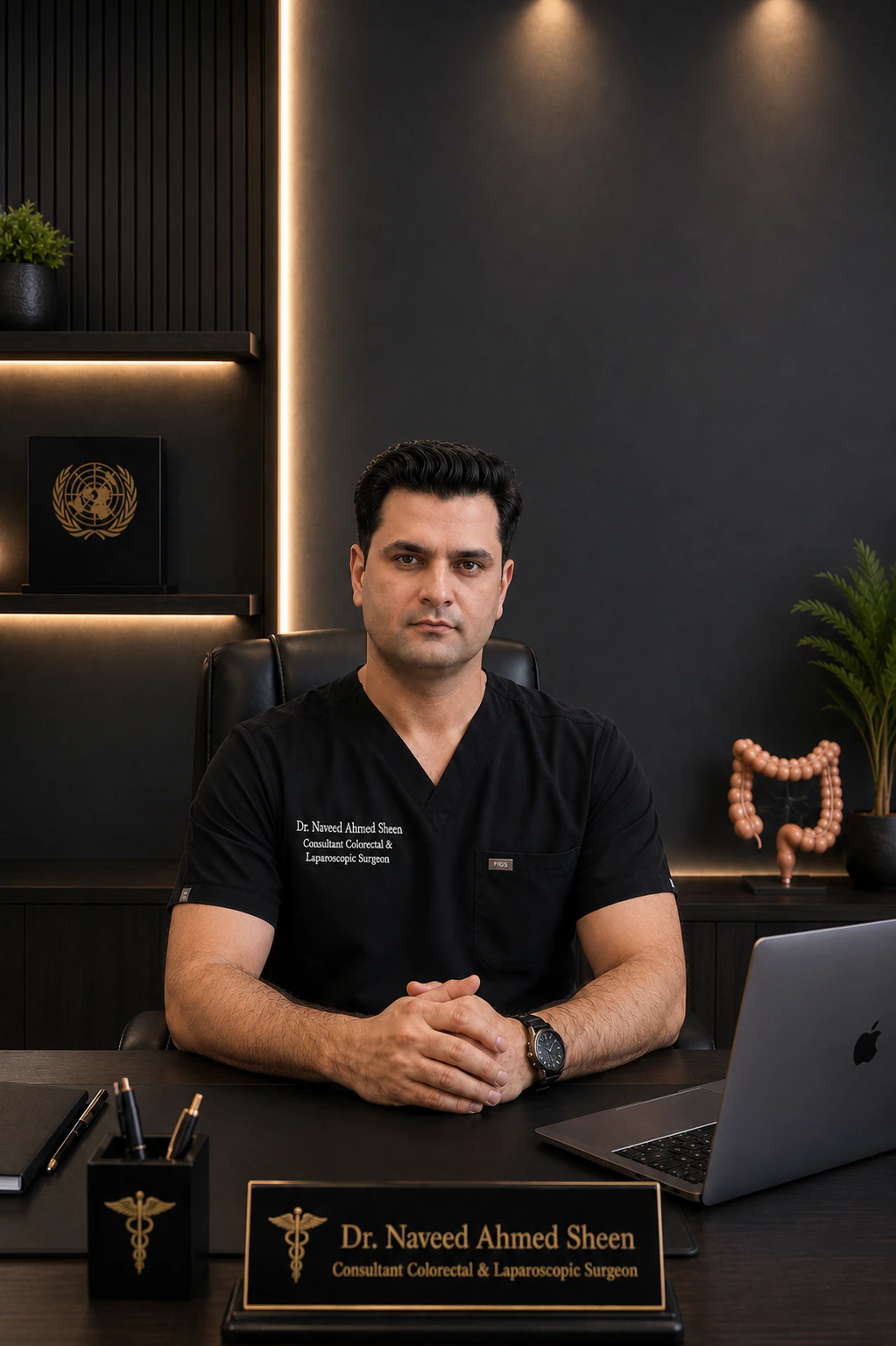
17 · Meet your surgeon
Dr. Naveed Ahmed Sheen
Consultant Colorectal & Laparoscopic SurgeonAssistant Professor and Major (Retired), combining 15+ years of surgical experience with academic teaching, military medical service and a patient-centred approach.
- MRCS · Dip (AFPGMI) · CHPE
- 1000+ successful surgeries
- 5000+ patients treated
Confidential surgical consultationDiscuss Varicose Vein Surgery
Discuss Varicose Vein Surgery
with Dr. Naveed
Bring your symptoms, reports and questions for a diagnosis-led discussion of appropriate options, benefits, risks and recovery planning.