Head, Neck & Breast Surgeries
Thyroid Surgery
Thyroid surgery removes one lobe, most of the gland or the whole thyroid. It may be advised for cancer, a suspicious nodule, a large goitre causing pressure, or overactive thyroid disease that is not best managed by other treatments.
Educational planning information. Individual advice follows examination and review of investigations. Consultations are available in Rawalpindi for patients from Rawalpindi and Islamabad.
Clinical focusHead, neck and breast anatomy
01Thyroid disease and thyroidectomy02Head, neck and breast anatomy03Head, Neck & Breast Surgeries
Procedure-specific visual guideWhy choose Dr. Naveed
Experienced surgical judgement for Thyroid Surgery
Clear diagnosis, realistic treatment planning and careful follow-up from a consultant surgeon whose clinical practice is shaped by academic teaching and military medical service.
01 · Understanding the procedure
What Thyroid Surgery is designed to achieve
The butterfly-shaped thyroid sits at the front of the neck and produces hormones that regulate metabolism. The voice nerves and parathyroid glands, which regulate calcium, lie close behind it.
Thyroid surgery removes one lobe, most of the gland or the whole thyroid. It may be advised for cancer, a suspicious nodule, a large goitre causing pressure, or overactive thyroid disease that is not best managed by other treatments.
02 · Conditions treated
Conditions and clinical situations addressed by Thyroid Surgery
The exact indication is confirmed from symptoms, examination and appropriate investigations.
Thyroid disease and thyroidectomy
The butterfly-shaped thyroid sits at the front of the neck and produces hormones that regulate metabolism. The voice nerves and parathyroid glands, which regulate calcium, lie close behind it.
Cancer or a suspicious biopsy result
Cancer or a suspicious biopsy result
A large goitre causing pressure or growth
A large goitre causing pressure or growth
Overactive thyroid not suitable for or controlled by other…
Overactive thyroid not suitable for or controlled by other treatment
03 · Symptoms
Symptoms that may lead to a Thyroid Surgery consultation
A neck lump, visible enlargement or pressure when swallowing
Breathing difficulty or voice change with a large goitre
Symptoms of excess thyroid hormone such as palpitations, sweating and weight loss
Many nodules cause no symptoms and are found on imaging
Symptoms can overlap with other conditions. Severe, rapidly worsening or emergency symptoms require urgent medical assessment.
04 · Causes
Why the condition behind Thyroid Surgery may develop
- 01
Benign nodules, multinodular goitre or thyroid inflammation
- 02
Graves’ disease or toxic nodules
- 03
Confirmed or suspected thyroid cancer
05 · Risk factors
Risk context considered before Thyroid Surgery
Benign nodules
Benign nodules, multinodular goitre or thyroid inflammation
Graves’ disease or toxic nodules
Graves’ disease or toxic nodules
Confirmed or suspected thyroid cancer
Confirmed or suspected thyroid cancer
06 · Diagnosis
How the need for Thyroid Surgery is assessed
Ultrasound characterises nodules and guides needle sampling. Thyroid blood tests assess hormone function. CT, vocal-cord examination or additional imaging may be used for large, recurrent or cancerous disease.
Clinical history
Ultrasound characterises nodules and guides needle sampling.
Focused examination
Thyroid blood tests assess hormone function.
Laboratory testing
CT, vocal-cord examination or additional imaging may be used for large, recurrent or cancerous disease.
Imaging
Imaging is chosen when it can define anatomy, disease extent or an alternative explanation for the symptoms.
Special investigations
Any endoscopy, tissue sampling, vascular study or other specialist test is selected for the clinical question raised by thyroid disease and thyroidectomy; not every patient needs every test.
07 · Treatment options
Treatment choices before and alongside Thyroid Surgery
Observation, lifestyle measures, medical care, a focused procedure or surgery may be considered according to the confirmed diagnosis.
Observation & monitoring
Ultrasound surveillance for selected low-risk nodules
Medical management
Medication or radioactive iodine for some overactive thyroid conditions
Surgical treatment
Hemithyroidectomy, total thyroidectomy or completion thyroidectomy
08 · Surgical indications
When Thyroid Surgery may be recommended
Surgery is discussed only when the diagnosis, expected benefit, alternatives and individual risks support intervention.
- Cancer or a suspicious biopsy result
- A large goitre causing pressure or growth
- Overactive thyroid not suitable for or controlled by other treatment
- Patient preference after discussion of surveillance and treatment options
09 · Procedure overview
The Thyroid Surgery care pathway
Consultation
Discuss symptoms, priorities, previous care and relevant reports before deciding whether Thyroid Surgery is appropriate.
Diagnosis
Ultrasound characterises nodules and guides needle sampling.
Preparation
The team reviews medicines, anaesthetic readiness and procedure-specific instructions for Thyroid Surgery.
Procedure
Hemithyroidectomy removes one lobe and the central bridge Total thyroidectomy removes essentially all thyroid tissue
Recovery
Most patients mobilise and eat soon after surgery.
Follow-up
Healing, symptoms and the result of Thyroid Surgery are reviewed, with further care arranged when clinically necessary.
10 · Operative approach
How Thyroid Surgery may be performed
- 01
Hemithyroidectomy removes one lobe and the central bridge
- 02
Total thyroidectomy removes essentially all thyroid tissue
- 03
The recurrent laryngeal nerves and parathyroid glands are identified and protected
What Thyroid Surgery aims to improve
- Removal of cancer or a suspicious nodule
- Relief of pressure from a large goitre
- Definitive treatment of selected overactive thyroid disease
Balanced consent for Thyroid Surgery
- Bleeding in the neck that can affect breathing and requires urgent treatment
- Temporary or permanent voice change from nerve injury
- Low calcium after total thyroidectomy from parathyroid disturbance
- Scar, infection and need for lifelong thyroid hormone after total removal
No operation can guarantee an outcome. Personal risk depends on diagnosis, anatomy, health and the final technique.
13 · Recovery timeline
Recovery checkpoints after Thyroid Surgery
Most patients mobilise and eat soon after surgery. Calcium and parathyroid hormone may be checked after total thyroidectomy. Voice, wound, pathology and thyroid function are reviewed during follow-up. These checkpoints are planning prompts—not promises—and the treating team’s instructions take priority.
Week 1
Most patients mobilise and eat soon after surgery. Early priorities include pain control, safe movement and the first wound or procedure check when advised.
Week 2
Take thyroid hormone or calcium exactly as prescribed Activity still follows the individual discharge plan.
Week 4
Seek urgent help for neck swelling, breathing difficulty, persistent tingling or muscle cramps Return to work or exercise depends on the procedure and job demands.
Week 6
Attend blood tests and pathology review A slower or faster course can both be normal depending on the operation.
Long-term
Removal of cancer or a suspicious nodule Ongoing surveillance or specialist follow-up is arranged when the diagnosis requires it.
14 · Preparation
Preparing safely for Thyroid Surgery
01
Bring the complete record
Take reports, imaging, pathology and details of previous treatment relevant to thyroid disease and thyroidectomy.
02
Review medicines and allergies
Share prescribed medicines, blood thinners, diabetes treatment, supplements and allergies. Do not stop treatment without clinical instruction.
03
Complete pre-operative checks
Ultrasound characterises nodules and guides needle sampling.
04
Follow fasting instructions
Fasting depends on the anaesthesia plan for Thyroid Surgery; use the exact times supplied by the treating hospital.
05
Prepare for discharge
Arrange transport, suitable support and the supplies recommended for the expected day case or short inpatient stay, depending on extent.
06
Know the recovery plan
Ask about wounds, bathing, diet, lifting, driving, work, exercise and the warning signs specific to Thyroid Surgery.
15 · Aftercare
Aftercare following Thyroid Surgery
Written discharge instructions are individualized. Keep them accessible and contact the treating team when recovery differs from the expected plan.
- Take thyroid hormone or calcium exactly as prescribed
- Seek urgent help for neck swelling, breathing difficulty, persistent tingling or muscle cramps
- Attend blood tests and pathology review
- Protect the healing scar from sun after the wound closes
16 · Patient questions
Frequently asked questions about Thyroid Surgery
Ten procedure-specific answers to support a more informed consultation.
01Will I need thyroid tablets?+
They are required after total thyroidectomy. After one lobe is removed, some patients need replacement depending on follow-up blood tests.
02Can thyroid surgery change my voice?+
Temporary change can occur; permanent nerve injury is less common. Voice risks are discussed during consent.
03Why is calcium checked?+
The parathyroid glands can be temporarily affected during total thyroid surgery, causing low calcium.
04How is the need for Thyroid Surgery confirmed?+
Ultrasound characterises nodules and guides needle sampling. Thyroid blood tests assess hormone function. CT, vocal-cord examination or additional imaging may be used for large, recurrent or cancerous disease.
05When might Thyroid Surgery be recommended?+
Cancer or a suspicious biopsy result A large goitre causing pressure or growth
06Are there alternatives to Thyroid Surgery?+
Ultrasound surveillance for selected low-risk nodules Medication or radioactive iodine for some overactive thyroid conditions Hemithyroidectomy, total thyroidectomy or completion thyroidectomy
07What anaesthesia may be used for Thyroid Surgery?+
Usually general; selected minor procedures may differ. The anaesthetist confirms the safest option after reviewing the operation, medical history and individual risk.
08How long might I stay in hospital after Thyroid Surgery?+
Day case or short inpatient stay, depending on extent. Discharge depends on the procedure, pain control, mobility, eating or drinking where relevant, and the absence of concerning findings.
09What should I expect while recovering from Thyroid Surgery?+
Most patients mobilise and eat soon after surgery. Calcium and parathyroid hormone may be checked after total thyroidectomy. Voice, wound, pathology and thyroid function are reviewed during follow-up.
10Which warning signs matter after Thyroid Surgery?+
Follow the discharge instructions provided by the treating team. Important procedure-specific advice includes: Attend blood tests and pathology review Protect the healing scar from sun after the wound closes
Authoritative patient-information referencesGeneral education supporting this procedure guide.
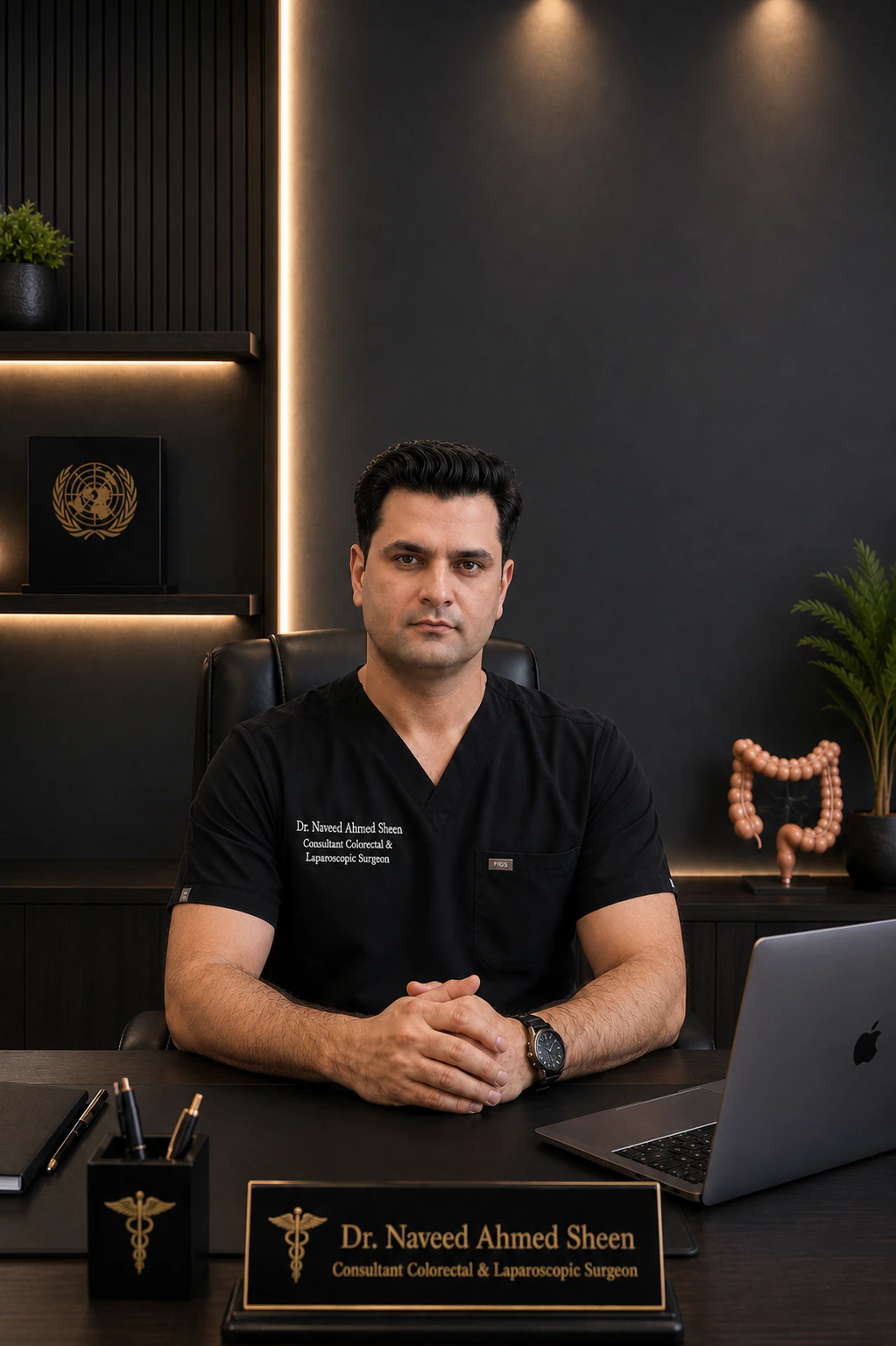
17 · Meet your surgeon
Dr. Naveed Ahmed Sheen
Consultant Colorectal & Laparoscopic SurgeonAssistant Professor and Major (Retired), combining 15+ years of surgical experience with academic teaching, military medical service and a patient-centred approach.
- MRCS · Dip (AFPGMI) · CHPE
- 1000+ successful surgeries
- 5000+ patients treated
Confidential surgical consultationDiscuss Thyroid Surgery
Discuss Thyroid Surgery
with Dr. Naveed
Bring your symptoms, reports and questions for a diagnosis-led discussion of appropriate options, benefits, risks and recovery planning.